This post contains affiliate links. We may earn a small commission if you purchase through our links, at no extra cost to you.
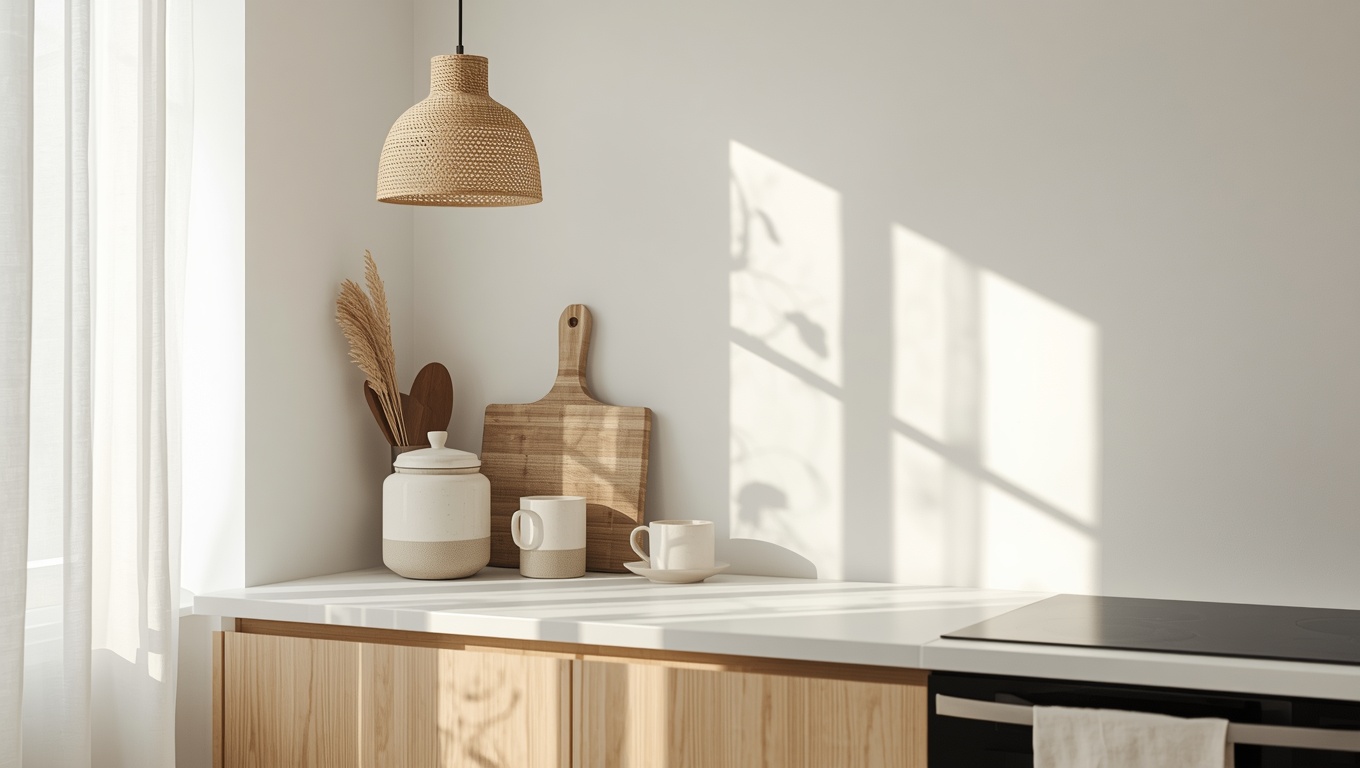
Your kitchen counter tells on you. The mismatched cutting boards, the plastic organizer that came free with something else, the dish towel that’s more stain than fabric at this point. It all adds up to a room that works hard but doesn’t look like it, and in a house full of intentional choices, the kitchen is usually the last one to catch up.
The good news is you don’t need a renovation to fix it. You need a few honest materials in the right neutral palette, and a willingness to let the counter breathe. Everything below ships fast from Amazon, costs a fraction of what it looks like, and reads as considered rather than curated-to-death.
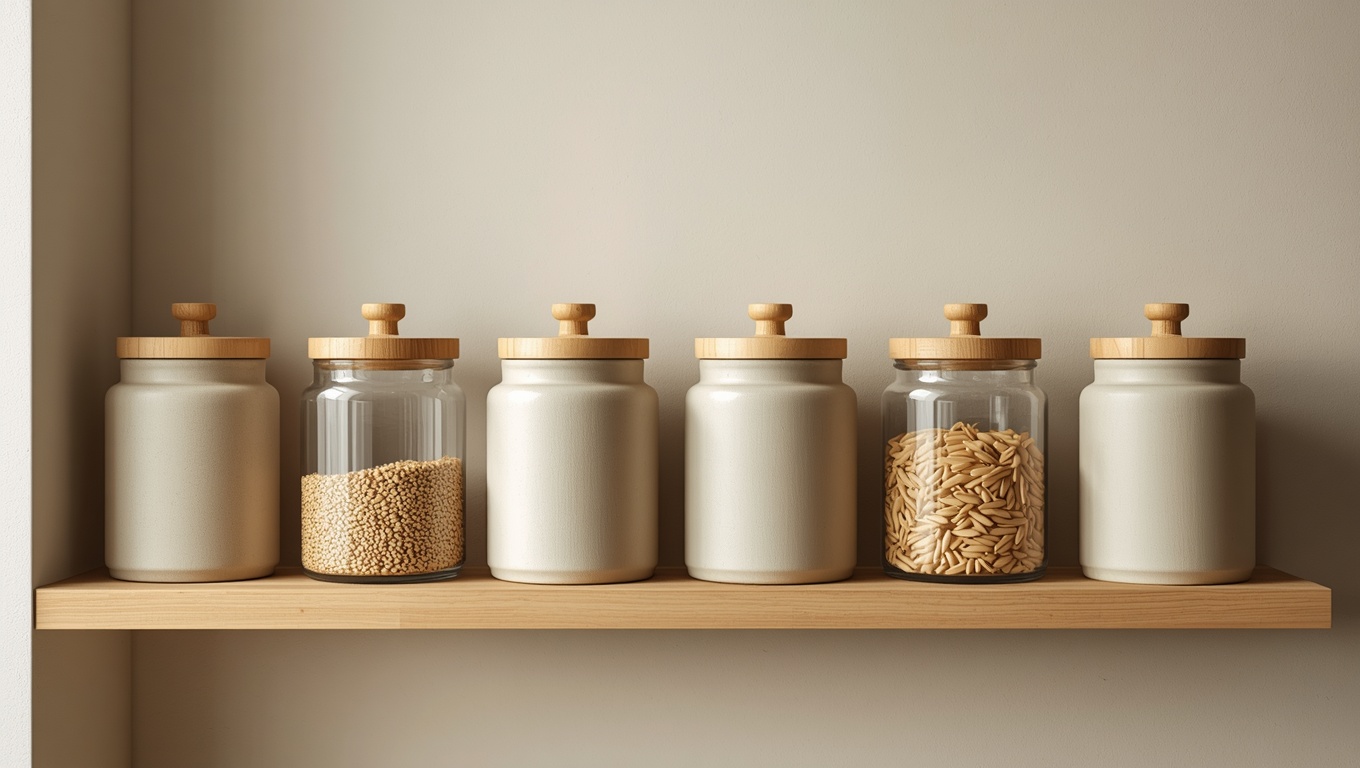
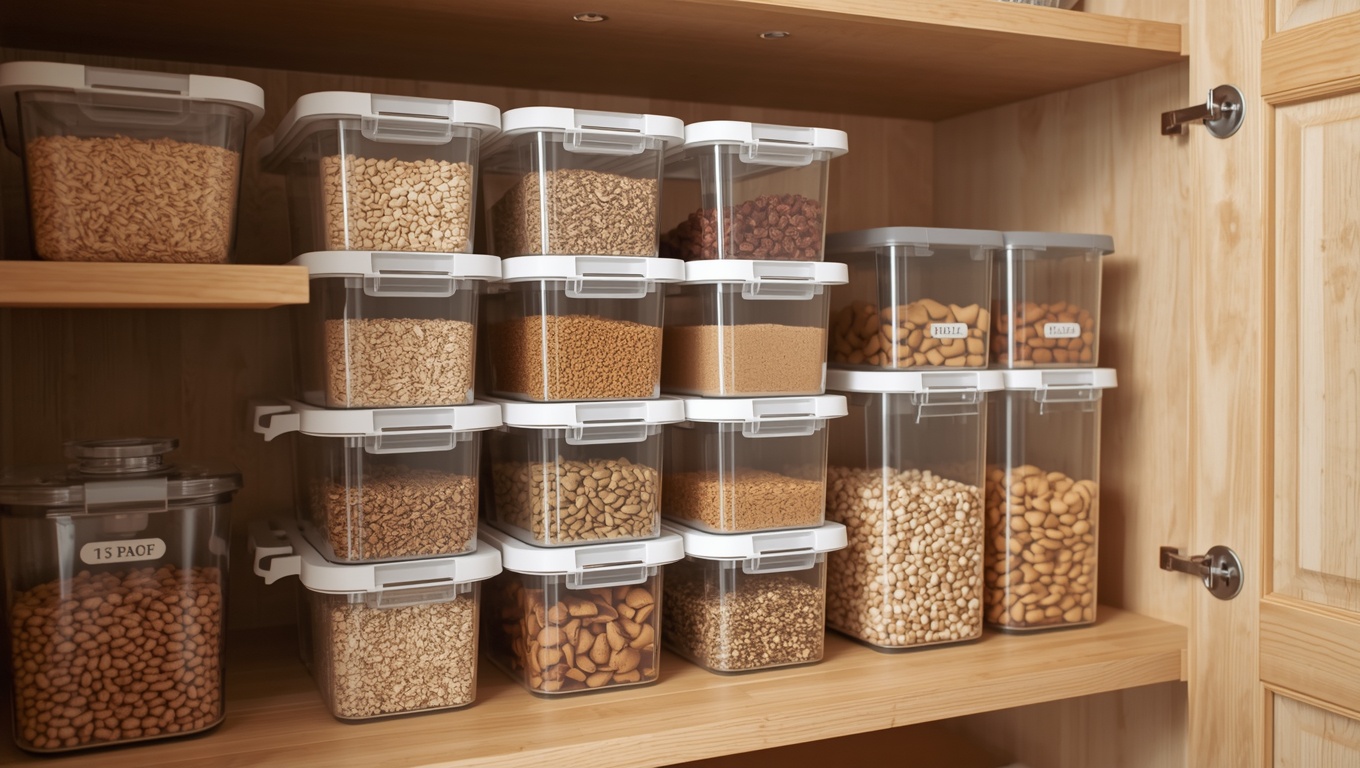
1. Stoneware Canister Set – Pantry, Elevated
This is a set of matte stoneware canisters for flour, sugar, rice, and coffee, sized to actually fit on a counter instead of dominating it. Line them up on open shelving or tuck them into a pantry nook where their soft, uneven glaze catches the light. They’re dishwasher safe, so the upgrade doesn’t cost you convenience.
Why it works: Uniform, honest materials turn everyday staples into part of the design instead of clutter you have to hide.
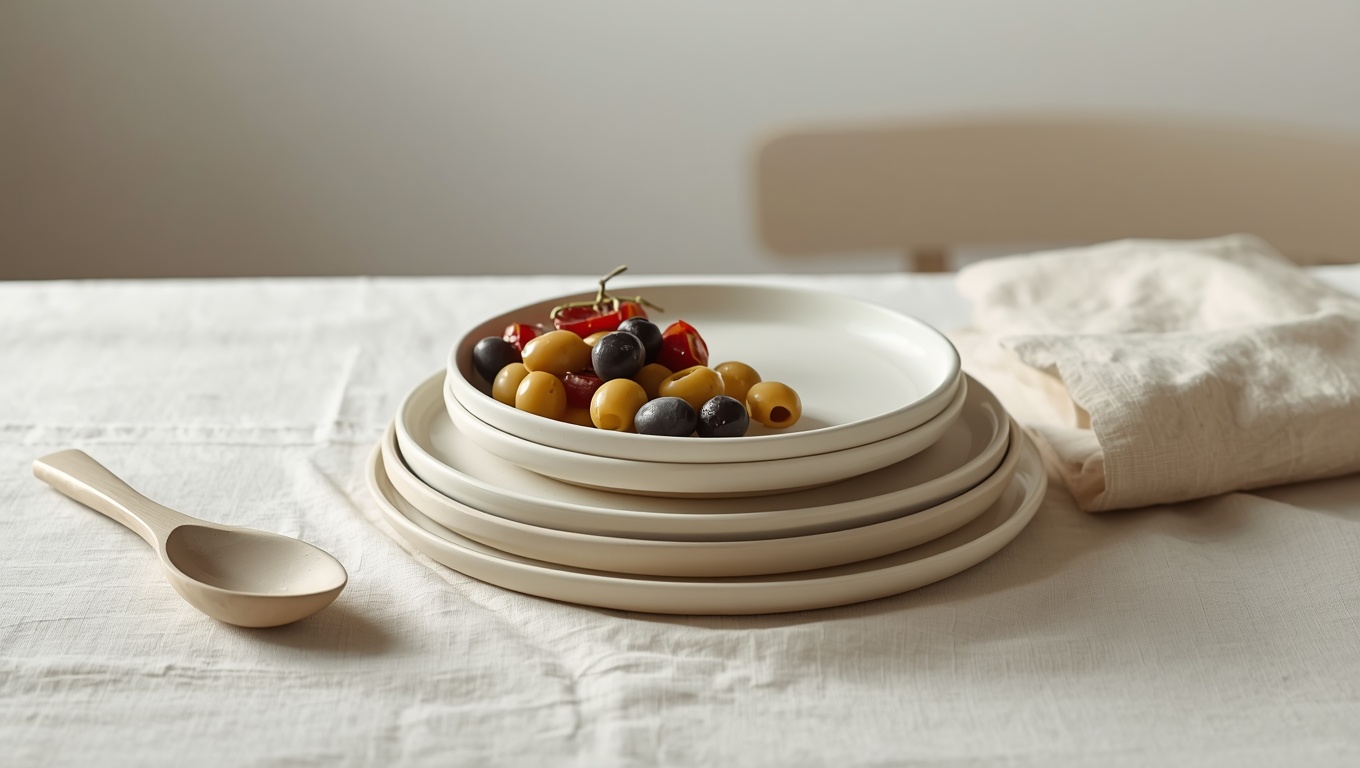
2. Ceramic Serving Platters – Quietly Does the Heavy Lifting
A stack of ceramic serving platters in soft, matte neutrals, the kind that work as hard for a Tuesday dinner as they do for guests. Use the largest for roasted vegetables or a cheese board, the smaller ones for sauces or a stack of toast. They’re dishwasher safe, which matters more than anyone admits when they’re buying serveware.
Why it works: A considered neutral palette on your table does the same job a curated gallery wall does on your walls: it makes everything feel intentional, not accumulated.
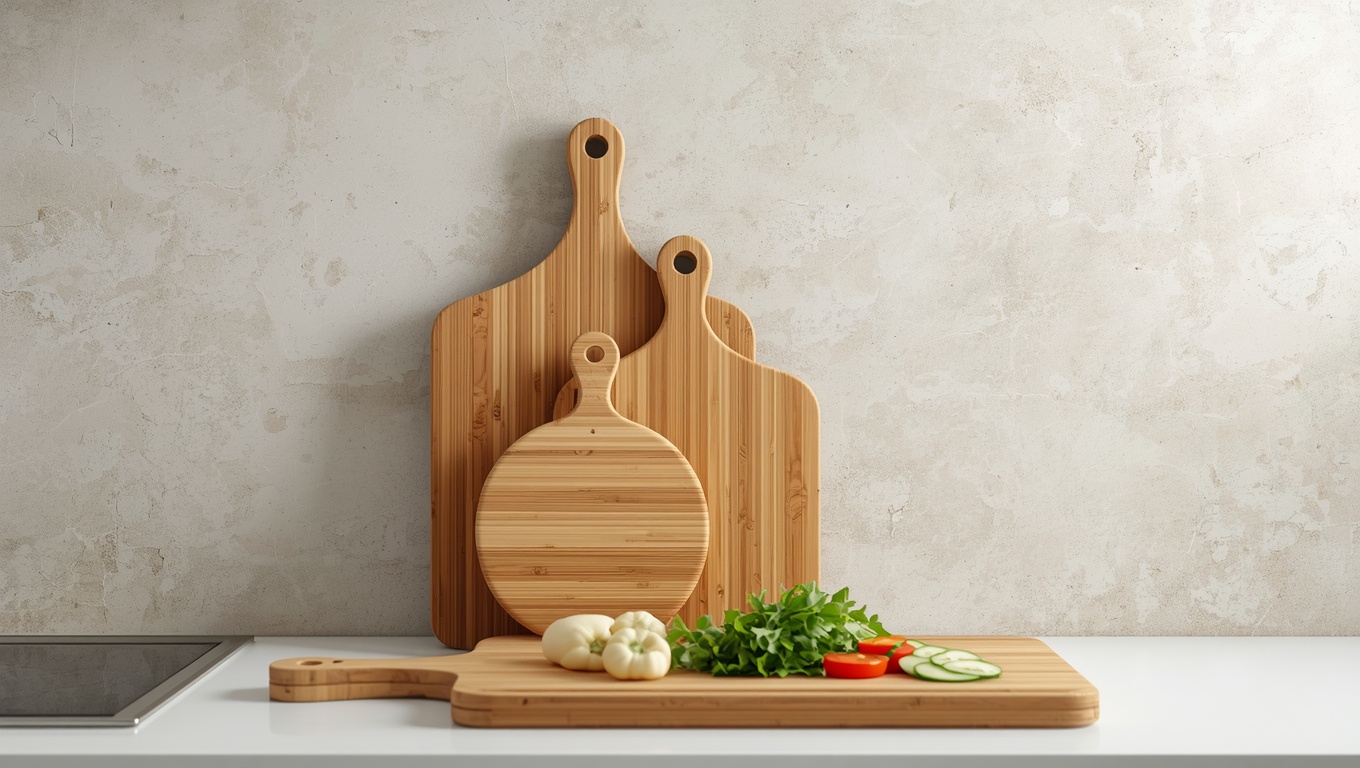
3. Bamboo Cutting Boards – The Counter’s Best-Dressed Tool
A set of bamboo cutting boards in graduated sizes, meant to be used and then propped up on the counter like a small sculpture between meals. Bamboo wrinkles beautifully with use, developing a patina that plastic never earns. Keep the largest one leaning against the backsplash for easy reach, and use the smallest for garlic and citrus.
Why it works: Organic materials left visible, rather than stashed in a drawer, are the backbone of a Japandi kitchen. A tool this good-looking doesn’t need to be hidden.
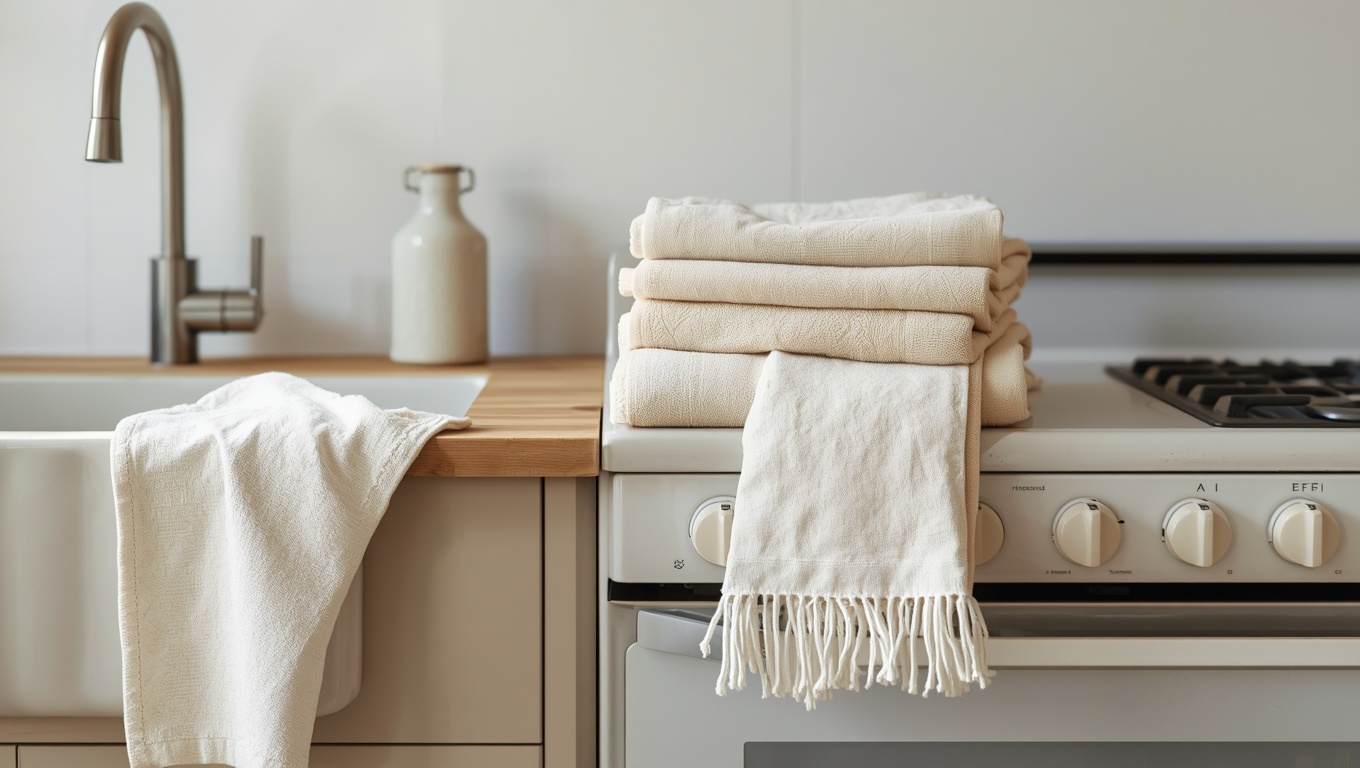
4. Organic Cotton Kitchen Towels – The Upgrade You Feel Immediately
Undyed, organic cotton kitchen towels that dry fast and don’t hold onto smells the way synthetic blends do. Drape one over the oven handle, fold another next to the sink, and let the raw, undyed color do the work. They soften with every wash, which only improves them.
Why it works: Undyed, natural fiber is the quiet signature of a considered kitchen. It looks better the more it’s used, not less.
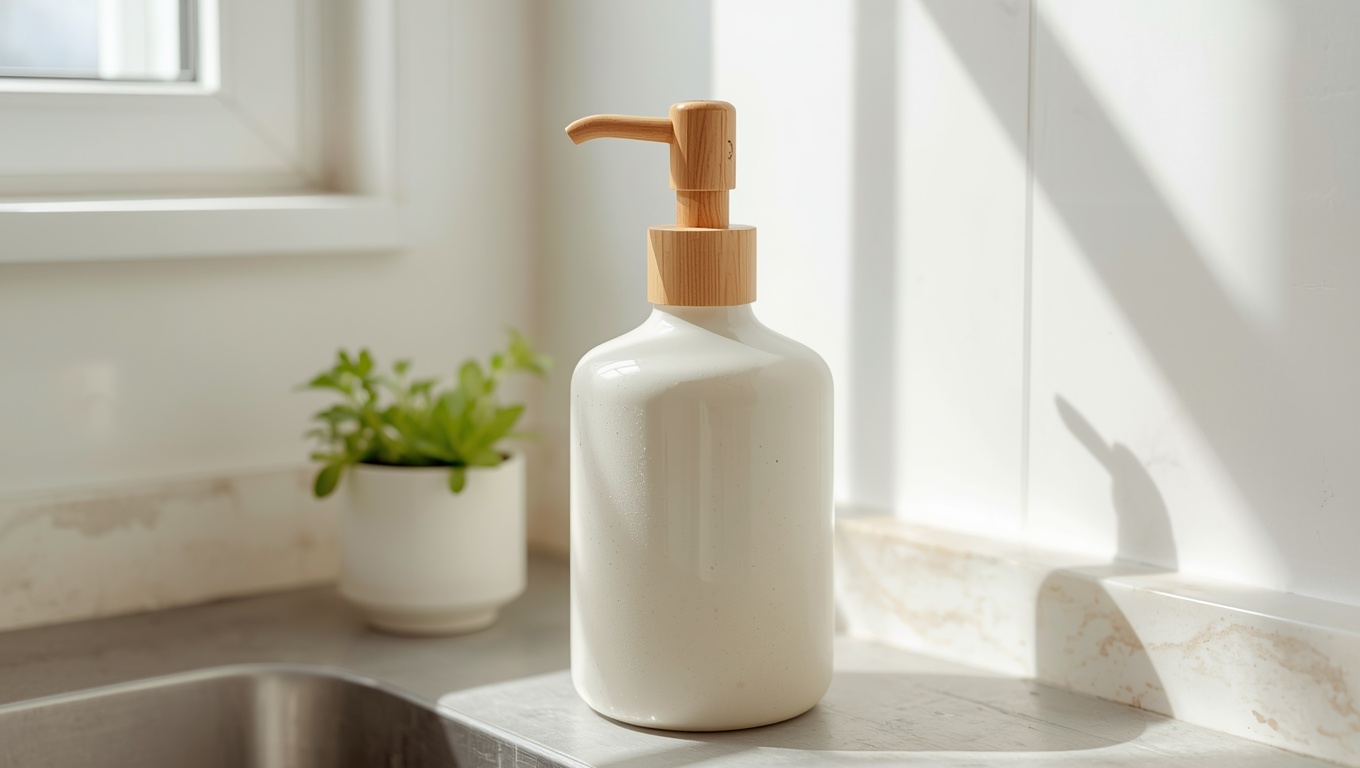
5. Ceramic Soap Dispenser – Small Object, Big Difference
A plain, unlabeled ceramic soap dispenser meant to replace the plastic bottle currently sitting by your sink. Fill it with your regular dish soap and let the simple, rounded form do the rest. It’s a tiny swap, but it’s the one guests notice without knowing why.
Why it works: Negative space and clean lines matter even at the smallest scale. One unlabeled object next to the sink removes visual noise from a spot your eye hits constantly.
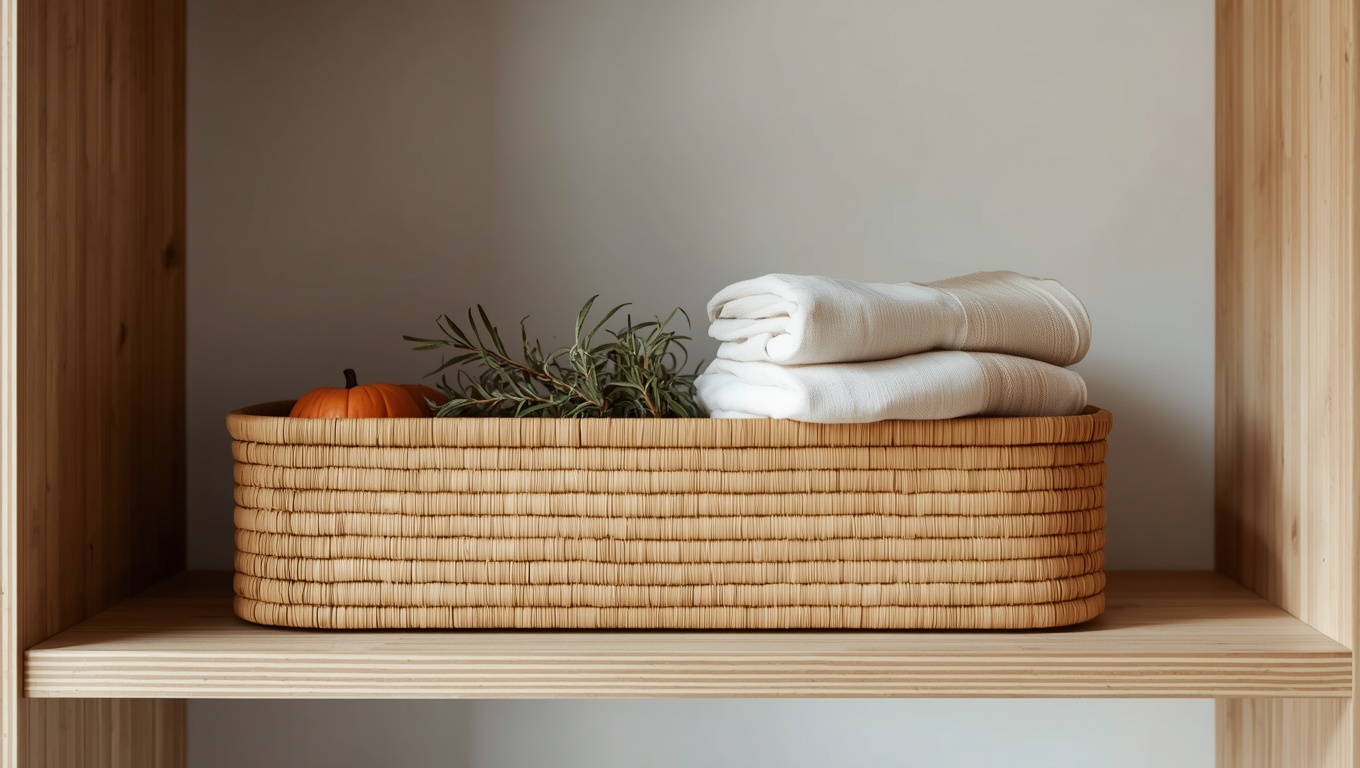
6. Seagrass Storage Basket – Texture Where You Need It
A rectangular seagrass basket built for corralling produce, napkins, or the odds and ends that otherwise wander your counter. Its natural weave adds texture without adding visual weight, which is the whole point of styling with woven materials. Use it on an open shelf or under the sink to keep essentials contained but not hidden away in plastic bins.
Why it works: Woven, natural texture is what keeps a neutral palette from feeling flat or clinical. It’s the wabi-sabi element that makes a kitchen feel lived-in rather than staged.
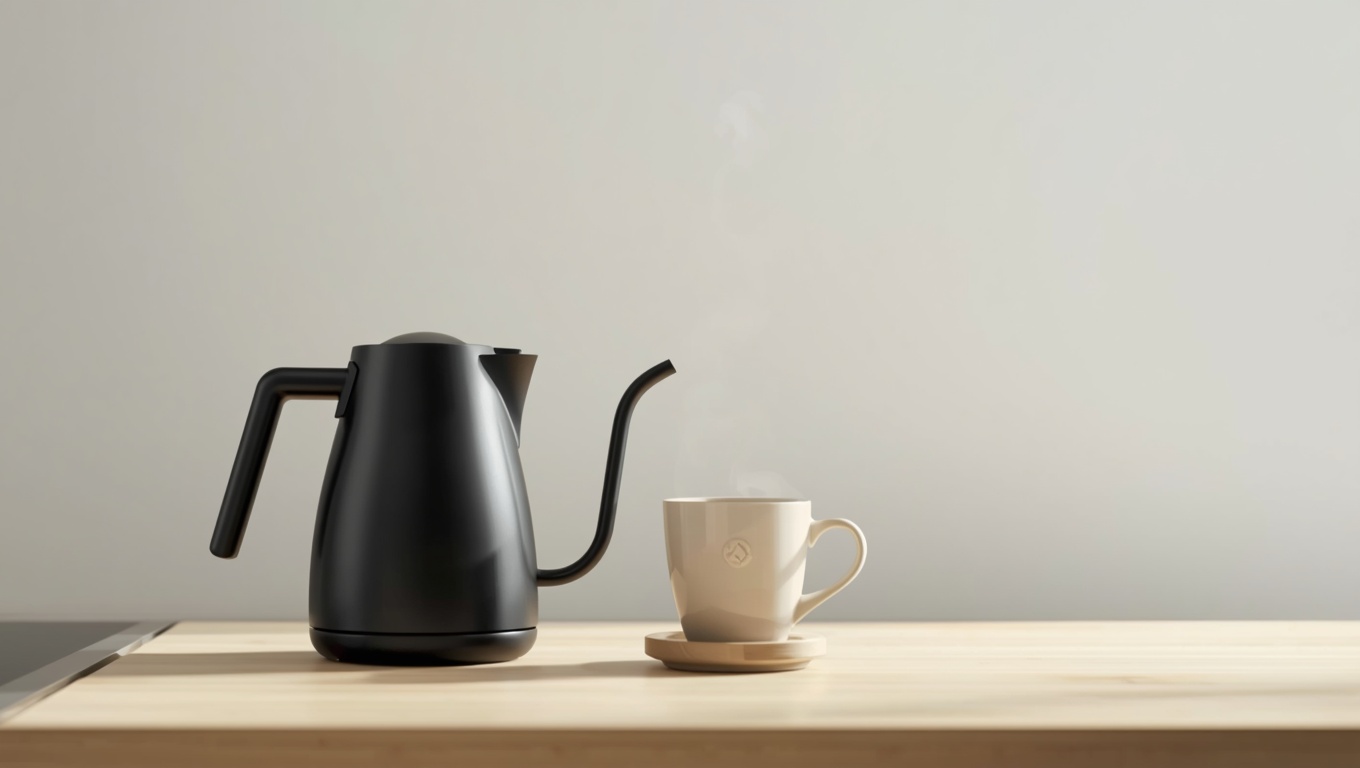
7. Gooseneck Electric Kettle – Lighting Is Architecture, Kettles Are Ritual
A gooseneck electric kettle with a matte finish and a slim, precise spout built for pour-over coffee or the kind of tea you actually take your time with. Leave it out on the counter next to your mugs rather than tucking it into a cabinet. It heats fast, which matters on the mornings you didn’t plan to slow down but end up doing it anyway.
Why it works: A single well-designed tool, left visible, can anchor an entire counter. This is the kind of considered object that earns its spot in plain sight.
8. Stackable Counter Organizer – The Cabinet Fix Nobody Sees Coming
A stackable, expandable organizer built for cabinets and pantries, meant to turn a chaotic stack of plates or cans into neat, accessible rows. It’s not glamorous, but it’s the reason the inside of your cabinets can finally match the outside of your kitchen. Adjust the tiers as your storage needs change, no extra purchase required.
Why it works: Intentional design doesn’t stop at what’s visible. An organized, considered interior is what keeps the calm of an open shelf from being undone the moment you open a cabinet door.
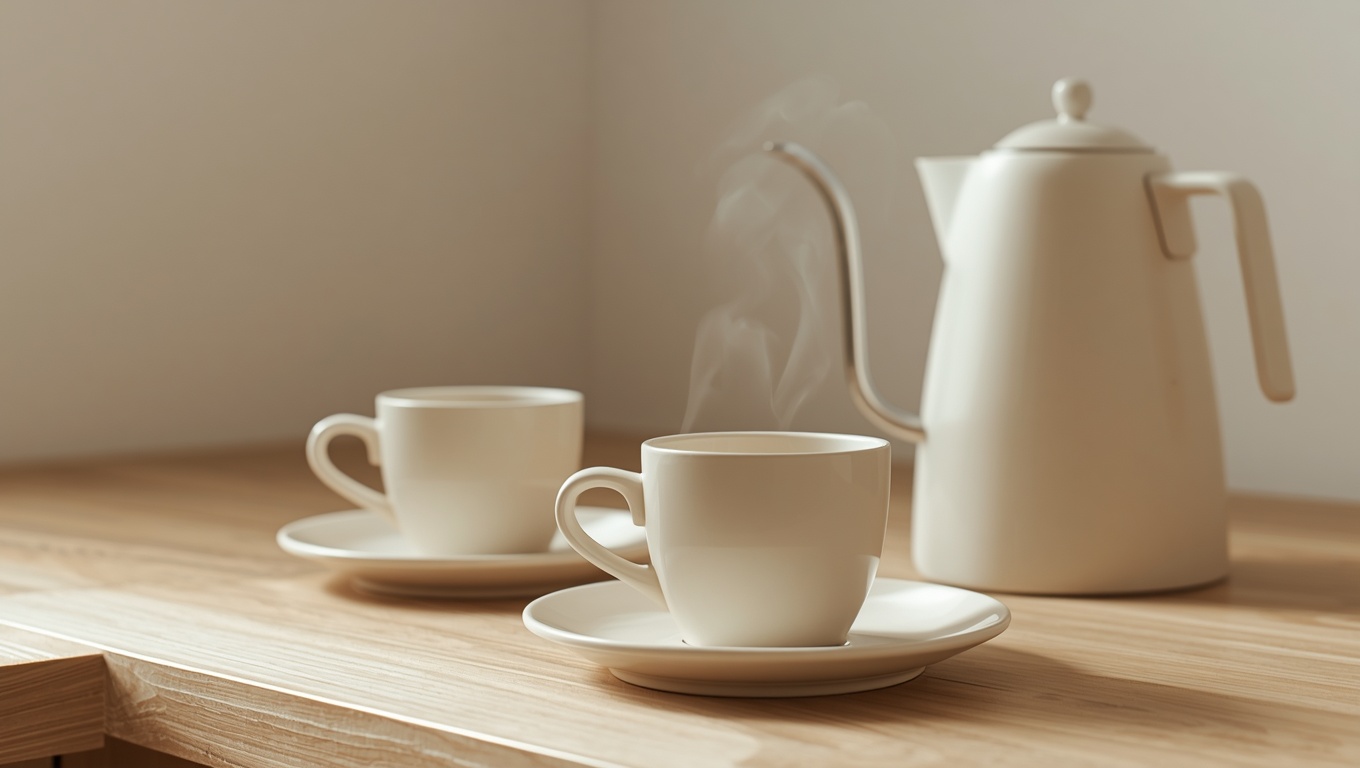
9. Cappuccino Mug Set – Slow Mornings, Considered Cups
A set of microwave-safe cappuccino mugs in a soft, rounded shape, sized for a proper morning coffee rather than a gas-station-sized pour. Stack them on an open shelf or hang them from hooks under a cabinet so they’re part of the display, not hidden in a drawer. The matte, neutral finish means they look right next to almost anything else on this list.
Why it works: Repetition of shape and tone, mug after mug, is what makes an open shelf feel curated instead of just full.
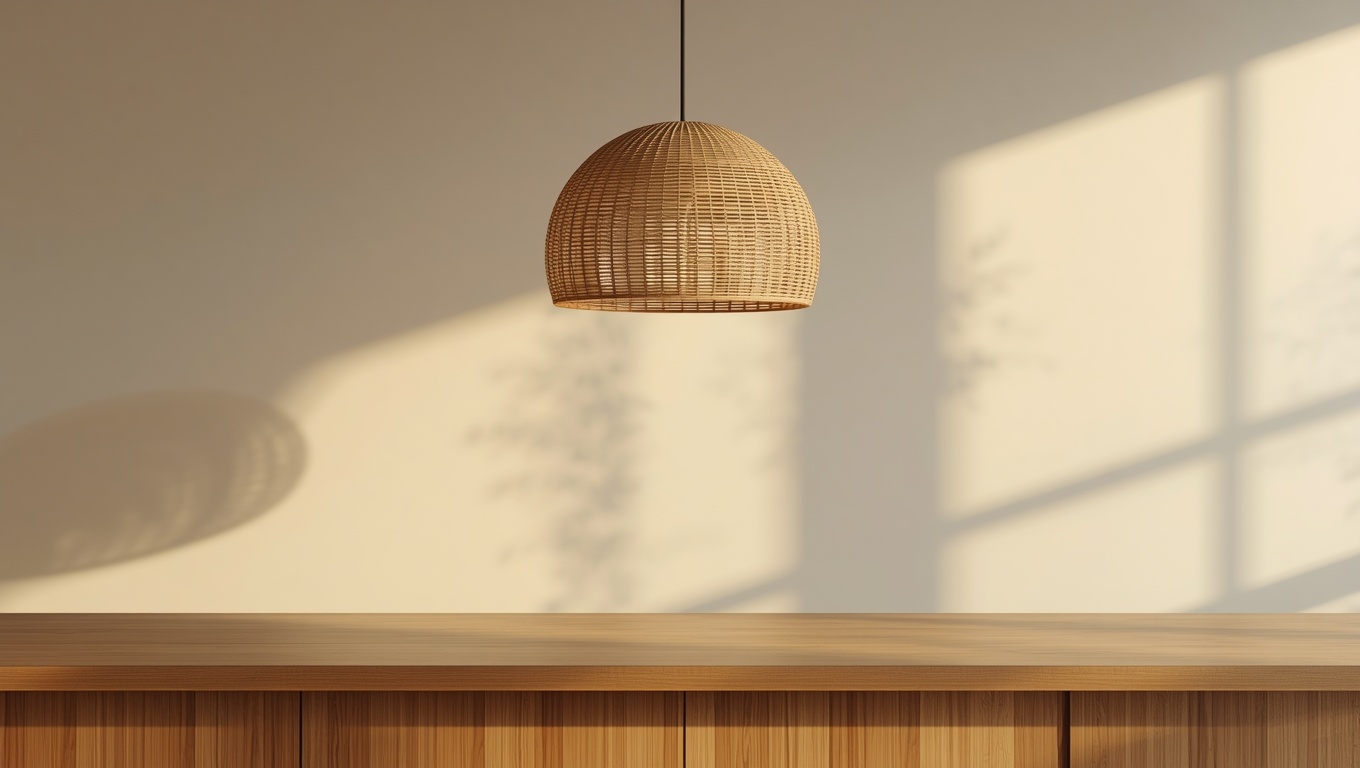
10. Hand-Woven Pendant Chandelier – Lighting Is Architecture
A six-light, hand-woven pendant fixture built from natural fiber, meant to hang low over an island or kitchen table as the room’s quiet focal point. It casts soft pools of light rather than harsh overhead glare, which changes how the whole room feels in the evening. Because it’s woven rather than solid, it adds texture and warmth instead of visual weight.
Why it works: Lighting is architecture. A hand-woven fixture like this does what a dozen smaller decor choices can’t: it sets the tone for the entire room the second you walk in.
The $40 Rule
Notice that almost everything on this list sits under $40. That’s not an accident, it’s the budget-conscious truth behind most Japandi kitchens you’ve admired online. The look comes from restraint and material choice, not from spending more.
If you’re starting from scratch, begin with what you touch every day: the cutting board, the kettle, the towels. Those three alone will shift how the whole room feels before you’ve bought anything else.
Everything else, the canisters, the baskets, the lighting, can be layered in slowly. The goal isn’t to buy the whole list at once. It’s to replace the things that don’t feel intentional with the ones that do, one considered swap at a time.
You Might Also Like
- 10 Japandi Bathroom Essentials You Can Find on Amazon
- 10 Japandi Bedroom Essentials You Can Find on Amazon (Under $70 Each)
- The Neutral Home Gift Guide – 10 Aesthetic Amazon Finds They’ll Actually Use
All prices accurate at time of publishing. Amazon prices fluctuate – check the current price on the product page.